Can Auto Wraps Help Protect Factory Paint? The Complete Truth
When vehicle owners consider getting a custom vinyl wrap, their primary motivation is almost always aesthetic: changing the car's color, adding a sleek satin finish, or promoting a business through commercial graphics. However, an increasingly common question among car enthusiasts and daily commuters is whether an auto wrap can also serve as a protective barrier for their vehicle's factory paint.
There is significant debate surrounding this topic. Some marketing claims exaggerate wraps as impenetrable armor, while skeptics dismiss vinyl as purely cosmetic. The reality lies in the middle: a high-quality cast vinyl wrap does provide valuable surface protection against specific types of daily environmental and UV wear, but it has distinct limitations when it comes to high-velocity mechanical impacts.
In this guide, we explore the protective capabilities of vinyl auto wraps, examine what they can and cannot protect against, compare their defensive properties to paint protection film (PPF), and explain how a wrap preserves your vehicle's factory clear coat and long-term resale value.
Table of Contents
Jump directly to any section of this comprehensive service guide.
How Vinyl Wraps Protect Against Sun Fading and UV Damage
One of the greatest threats to automotive paint—especially in sunny southern climates like Florida—is relentless ultraviolet (UV) radiation. Over years of daily exposure, solar UV rays break down the chemical bonds in automotive clear coats, leading to oxidation, chalking, and eventual clear coat delamination.
A high-grade cast vinyl wrap acts as a physical UV shield. The multi-layered vinyl film contains UV-absorbing pigments and stabilizing agents engineered to block the sun's rays from penetrating through to the underlying surface.
Because the vinyl absorbs the brunt of the daily solar radiation, your factory paintwork beneath remains completely sheltered from UV-induced fading, discoloration, and oxidation.
When the vinyl wrap is eventually removed after several years of use, the factory paint retains its original rich depth and high gloss, looking just as vibrant as the day the wrap was installed.
Defending Against Environmental Fallout and Chemical Staining
Beyond solar radiation, automotive paint is constantly subjected to airborne contaminants, acid rain, bird droppings, tree sap, and road grime. These environmental hazards contain acidic compounds that can etch into soft clear coats within hours if left uncleaned under the sun.
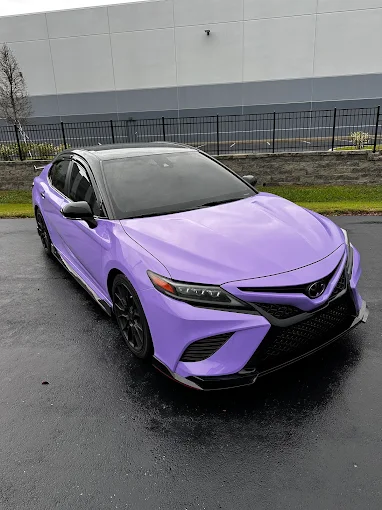
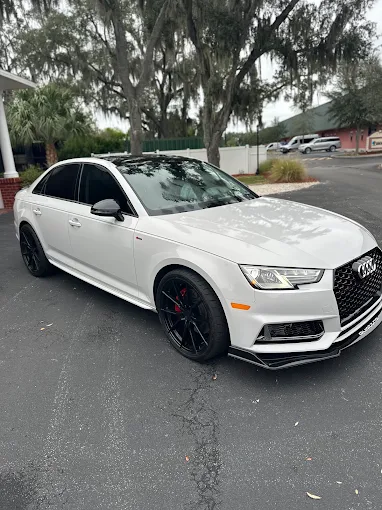
A vinyl wrap creates a non-porous, chemically resistant barrier over your car's painted panels. Corrosive substances like bird lime, acidic bug splatter, and sticky tree sap land directly on the vinyl surface rather than your delicate factory paint.
While prolonged contact with acidic contaminants can sometimes stain or degrade the vinyl itself, the critical point is that the sacrificial vinyl takes the damage instead of your original factory clear coat.
If a panel wrap becomes severely stained or damaged by environmental fallout, that single piece of vinyl can simply be removed and replaced at a fraction of the cost of repainting an OEM panel.
Protection Against Light Scratches, Swirls, and Scuffs
Everyday ownership inevitably exposes vehicles to light abrasions, such as accidental brush marks from shrubbery, light door dings in tight parking spaces, and swirl marks caused by improper hand washing or drying towels.
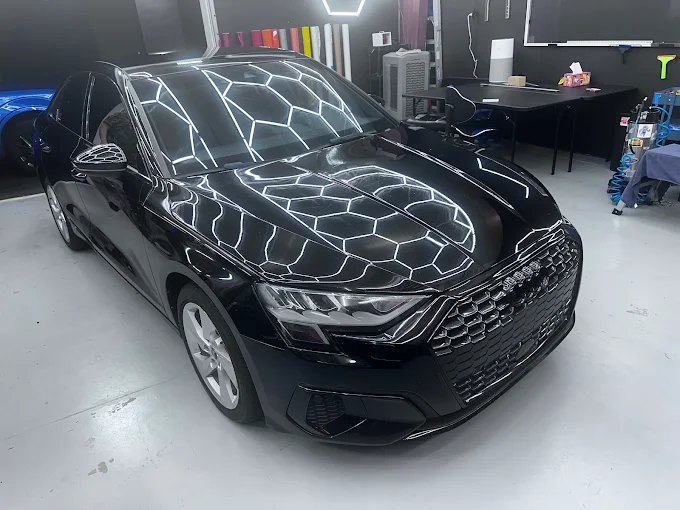
A premium 3 to 4 mil cast vinyl wrap acts as a physical buffer that absorbs these minor surface abrasions. Light scuffs and wash swirls affect only the outer vinyl layer, leaving the factory clear coat beneath completely pristine and scratch-free.
Additionally, many modern premium vinyl wraps possess mild self-healing properties when exposed to warmth. Light micro-scratches on the vinyl surface can soften and relax under direct sunlight or hot water, restoring a smooth aesthetic.
By absorbing routine wear and tear, a vinyl wrap ensures that your vehicle's factory clear coat remains untouched by everyday swirl marks and minor surface scuffs.
The Big Limitation: High-Speed Rock Chips and Road Debris
While auto wraps provide excellent defense against UV rays, chemical stains, and light scuffs, it is vital to understand their limitation: vinyl wraps are not engineered to stop high-speed highway rock chips.
Automotive wrap vinyl is typically 3 to 4 mils (approx. 75 to 100 microns) thick and composed of polyvinyl chloride (PVC). PVC is designed for dimensional stability and stretchability, not heavy kinetic shock absorption.
When a sharp piece of gravel or highway asphalt strikes a wrapped panel at 70 mph, the projectile easily punctures or tears the thin vinyl film. In many cases, the projectile carries enough residual energy to chip the underlying paint as well.
If heavy-duty rock chip prevention is your primary objective, you need Paint Protection Film (PPF), which is more than twice as thick (8 to 10 mils) and made from energy-absorbing thermoplastic polyurethane (TPU). For the best of both worlds, many drivers install clear PPF directly over the high-impact front bumper of their vinyl wrap.
Pre-Existing Paint Condition: What Happens to Damaged Clear Coat?
A crucial factor in determining whether an auto wrap will protect your paint is the condition of the paint prior to installation. A vinyl wrap can only protect paint that is already in good, structurally sound condition.
If your vehicle currently has peeling clear coat, severe rust, deep stone chips, or failing aftermarket paint, installing a vinyl wrap is not recommended without proper bodywork preparation.
Vinyl conforms tightly to the surface beneath it, meaning any pre-existing stone chips, scratches, or paint peeling will be visible as imperfections under the wrap.
Furthermore, if the clear coat is already delaminating or weakly bonded, the adhesive of the vinyl wrap can pull the failing clear coat completely off the vehicle during removal. A wrap preserves healthy factory paint, but it cannot restore failed paint.
Preserving Resale Value and Trade-In Equity
One of the most compelling financial benefits of wrapping a vehicle is the preservation of factory paint equity. In the automotive market, original factory paintwork is highly prized by collectors, dealerships, and prospective buyers.
Vehicles with original OEM paint command significantly higher trade-in and private resale values compared to vehicles that have undergone aftermarket panel repainting or suffer from sun-faded clear coats.
Repainting a car also triggers suspicion among savvy buyers who may suspect previous collision damage, and body shop repaints rarely match the robotic precision, baking temperature, and durability of factory OEM paint.
By wrapping your vehicle early in its life, you enjoy a personalized aesthetic today while sealing and preserving your factory paint in pristine condition, ensuring top dollar when it comes time to sell or trade in.
Best Practices for Safe Wrap Removal Without Paint Damage
To ensure that an auto wrap successfully protects your factory paint without causing any harm upon removal, adhering to professional removal standards is essential.
High-quality cast vinyl films from reputable manufacturers like 3M and Avery Dennison are engineered with clean-release acrylic adhesives designed to be cleanly uninstalled within their recommended lifespan (typically 4 to 7 years).
Professional removal involves applying controlled heat using industrial heat guns or infrared heat lamps. The heat softens both the vinyl and the underlying adhesive, allowing the film to be peeled away smoothly at a 45-degree angle without leaving heavy glue residue or stressing the clear coat.
Leaving a wrap on a vehicle far beyond its manufacturer-rated lifespan (e.g., 8+ years under constant Florida sun) can cause the vinyl to bake into the clear coat, making removal significantly more labor-intensive. Proper removal within the recommended window guarantees flawless factory paint underneath.
Contact Us Today
Have questions or need emergency service? Reach out to our dedicated team anytime.
SS WRAPS & TINTS
Fast, dependable support and honest pricing across our service area.
Frequently Asked Questions
Find clear, helpful answers to common questions regarding our process, pricing, equipment, and satisfaction guarantee.
Does a vinyl wrap protect against rock chips?
Can a vinyl wrap damage factory paint when removed?
Does an auto wrap protect paint from the Florida sun?
Can you wrap a car with peeling clear coat?
Can bird droppings damage a vinyl wrap?
How does wrapping a car help its resale value?
Related Articles
Tesla Protection Film Services in Tampa, FL
Tesla Paint Protection Film Services in Tampa, FL | Model 3, Y, S, X, Cybertruck
Read Article →Cybertruck Window Tinting Services in Tampa, FL
Cybertruck Window Tinting Services in Tampa, FL | SS Wraps & Tints
Read Article →BMW Auto Wraps in Tampa, FL
BMW Auto Wraps in Tampa, FL | M-Series & Luxury Vinyl Color Changes
Read Article →